
2025 Medicare Physician Fee Schedule (PFS) Final Rule. Key Changes Impacting Remote Care.
The Centers for Medicare & Medicaid Services (CMS) has released the Calendar Year (CY) 2025 Medicare Physician Fee Schedule Final Rule.
It includes several key changes that will impact physicians, hospitals, Rural Health Centers (RHCs) and Federally Qualified Health Centers (FQHCs).
This article provides a concise overview of these changes and their implications for professionals and administrators involved in remote care.
Please read the updates to stay informed about the upcoming developments.
Elimination of G0511 for Care Coordination Services in RHCs and FQHCs
Effective January 1, 2025, RHCs and FQHCs will no longer report the single HCPCS code G0511 for care coordination services.
Instead, they will be required to report the individual CPT and HCPCS codes that describe the specific care coordination services provided.
This change is designed to offer greater transparency and align reimbursement with the specific services delivered.
What is G0511 Being Replaced With?
The current code for care coordination services, G0511, will be replaced by individual codes that reflect specific care coordination activities, such as CPT codes 99490 for non-complex Chronic Care Management and 99439 for additional time spent on Chronic Care Management.
Add-on Codes
CMS is also proposing the ability to bill for add-on codes that are associated with these services, ensuring that RHCs and FQHCs are reimbursed appropriately for the time spent on more complex or extended care coordination activities.
Transition Period

To provide RHCs and FQHCs sufficient time to update their billing systems, CMS is allowing a six-month transition period, lasting at least until July 1, 2025. This period will enable centers to implement the necessary adjustments to comply with the new billing requirements.
Introduction of Advanced Primary Care Management (APCM) Services
Another significant development in the CY 2025 PFS is the introduction of Advanced Primary Care Management (APCM) services.
APCM is designed to assist primary care physicians as they move toward value-based care models by providing a comprehensive bundle of care management services.
This bundle will incorporate elements of Principal Care Management, Transitional Care Management, and Chronic Care Management.
What Are The New Codes?
CMS has introduced three new HCPCS G-codes which will be used to identify the specific components of APCM services.
These codes will allow for more accurate billing and reimbursement of the bundled services provided to patients.
Unlike current care management codes, the new service elements do not include time-based thresholds, aiming to reduce the administrative burden linked with existing coding and billing processes.
Instead, the new APCM codes are stratified into three levels based on an individual’s number of chronic conditions and status.
The levels and their corresponding codes are as follows:
Level 1 (G0556) is for persons with one chronic condition;(Medicare Beneficiaries)
Level 2 (G0557) is for persons with two or more chronic conditions;(Medicare Beneficiaries)
Level 3 (G0558) is for persons with two or more chronic conditions; and status as a Qualified Medicare Beneficiary.
Support for RHCs and FQHCs

CMS will also allow RHCs and FQHCs to participate in APCM services and receive payment for these services based on the national non-facility PFS amounts.
This payment will apply when the individual APCM codes are included on RHC or FQHC claims, either alone or with other reimbursable services.
The introduction of APCM services presents a valuable opportunity for RHCs and FQHCs to enhance the care they provide, supporting their transition to value-based care models.
The reimbursement for these services is expected to strengthen the financial viability of these centers while improving care coordination for their patient populations.
Use of Existing CPT Codes
The CPT codes for Chronic Care Management (CCM), Transitional Care Management (TCM), and Principal Care Management (PCM) services will be included as part of the APCM bundle, reflecting essential elements of advanced primary care.
Unlike the five non-complex and complex chronic care management and principal care management codes introduced by CMS since 2013, which are billed based on the practitioner’s time spent, the APCM codes are billed monthly without being tied to a specific number of minutes.
Enhancement of Care Delivery
The integration of these CPT codes into APCM services aims to enhance care coordination and chronic condition management for primary care patients, supporting the shift toward value-based care models.
Telehealth Services

Finally, CMS proposes that starting January 1, 2025, telehealth services provided to beneficiaries in their homes may include real-time, two-way audio-only communication.
This option applies when the distant site physician or practitioner has access to video technology, but the patient is either unable or unwilling to use it.
Looking Ahead: Implications for 2025 and Beyond
The CY 2025 Medicare Physician Fee Schedule Final Rule reflects CMS’s commitment to advancing value-based care, enhancing transparency, and expanding access to remote and primary care services.
From the replacement of G0511 with individual CPT codes to the introduction of APCM services, these changes signal a significant shift in how care coordination and chronic condition management are supported and reimbursed.
For RHCs, FQHCs, and primary care providers, these updates offer new opportunities to streamline billing, strengthen financial viability, and improve patient outcomes.
As telehealth continues to evolve, the inclusion of audio-only communication further underscores CMS’s focus on accessibility and flexibility in patient care.
These changes will help streamline the delivery of care, support value-based care models, and provide clearer pathways for reimbursement for rural health providers.
Staying informed and proactive will be key for healthcare providers as they navigate these impactful changes.
References
Related Articles

How to Get Reimbursed Operating as a Federally Qualified Health Center?
What is a Federally Qualified Health Center? Federally Qualified Health Centers (FQHCs) are federally funded non-profit outpatient clinics. They exist to provide…
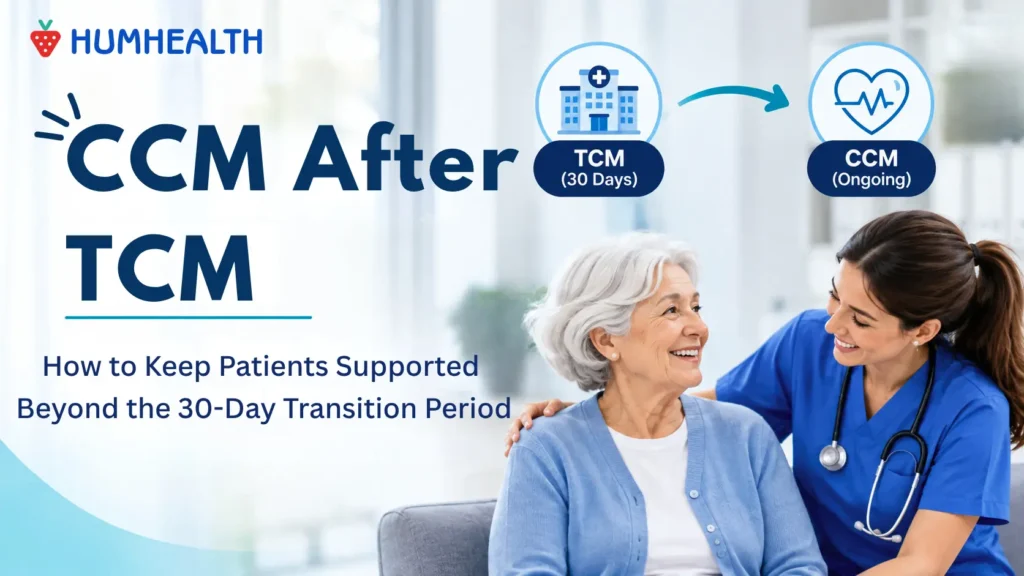
CCM After TCM: How to Keep Patients Supported Beyond the 30-Day Transition Period
A hospital discharge is the end of an inpatient stay, but it’s not the end of a patient’s care needs. Diabetes, heart…
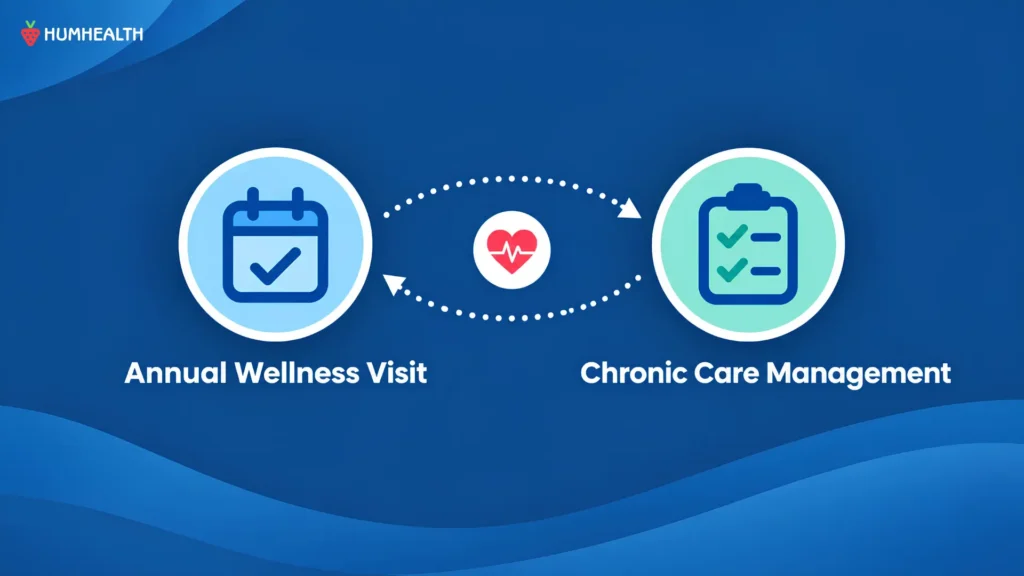
Chronic Care Management and Annual Wellness Visit: How They Connect in Ongoing Patient Care
Chronic care management (CCM) and annual wellness visit (AWV) programs work best as one connected system, not two separate services. The AWV…