Published:
March 25, 2026 | 8 min readRemote Patient Monitoring (RPM) is quickly emerging as one of the most critical services a healthcare professional or organization can offer to patients.
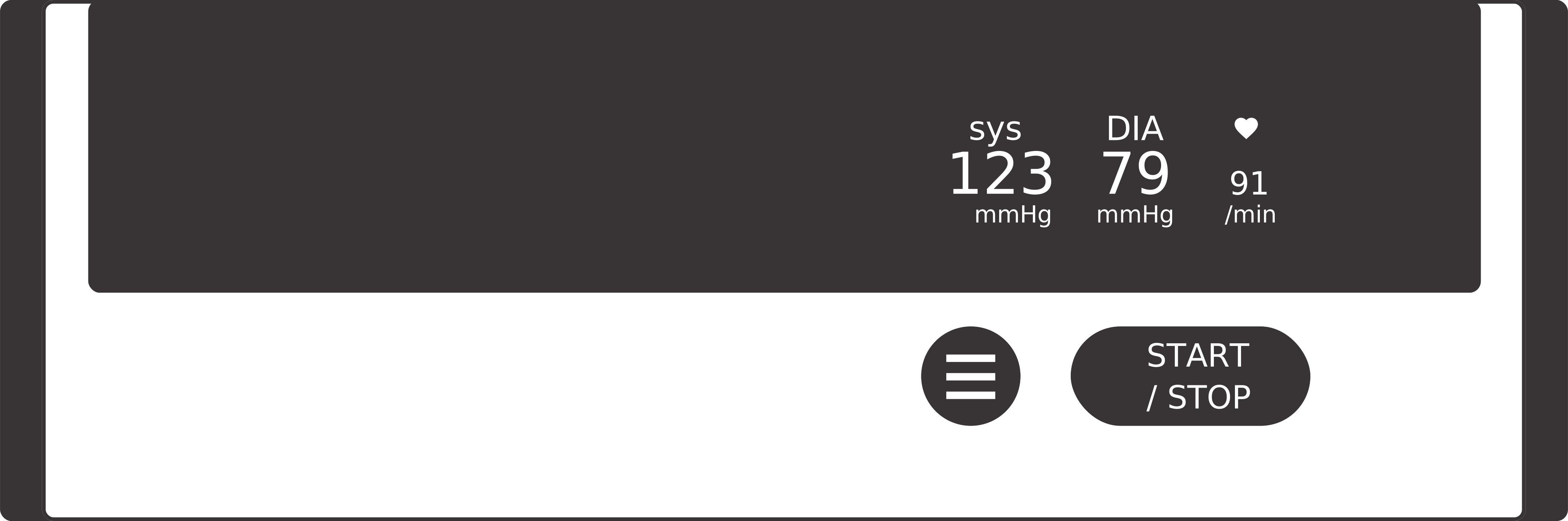
Remote patient monitoring (RPM) software enables healthcare providers to track patient vitals such as blood pressure, heart rate, and glucose levels outside traditional clinical settings using connected devices.
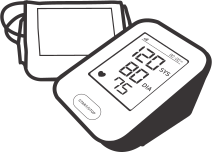
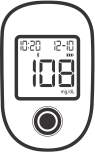
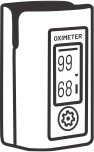
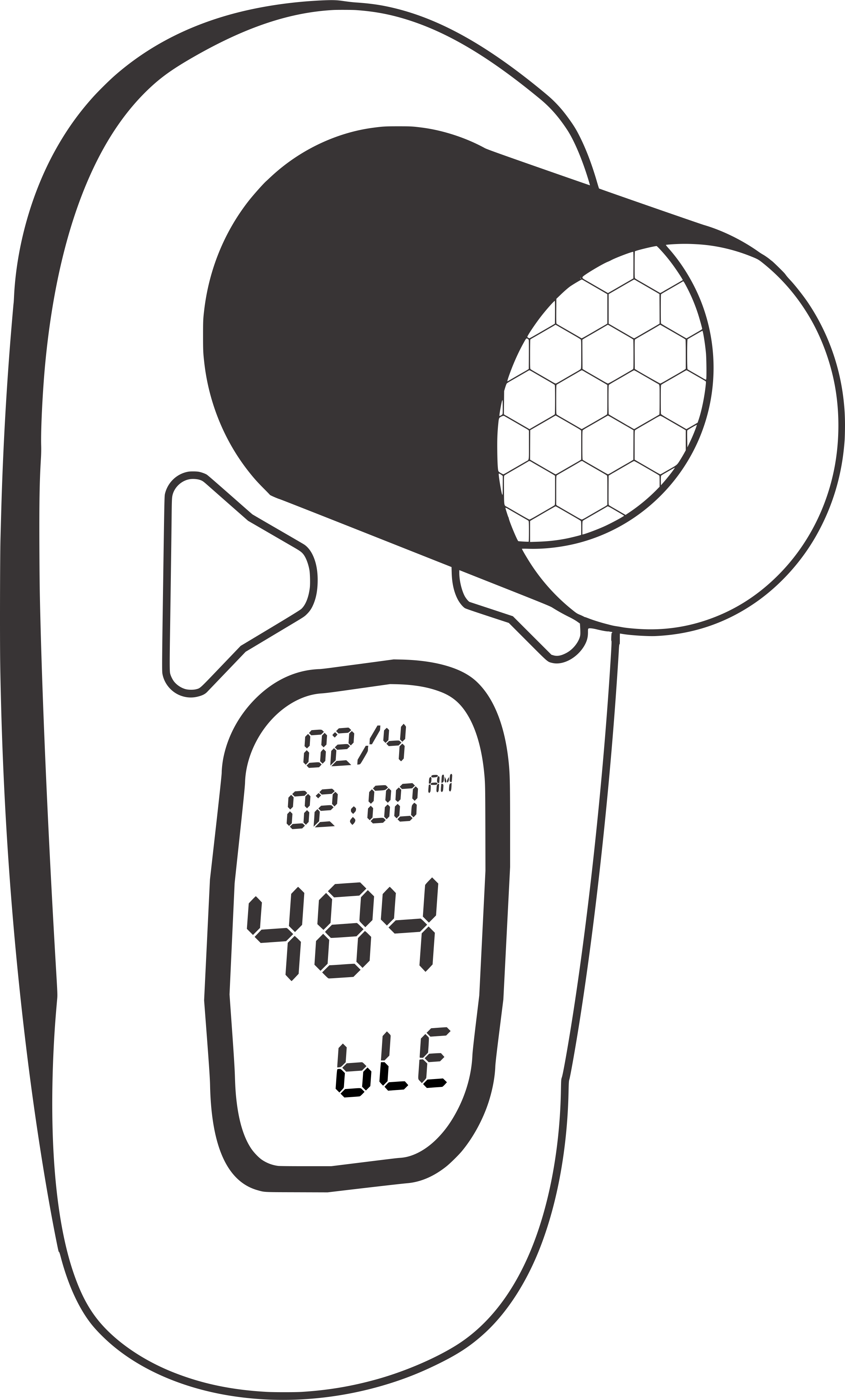
With this solution, clinics can easily monitor key health data points like glucose levels, oxygen saturation, and blood pressure without requiring patients to visit in person.
Beyond improving patient care, RPM programs also create a strong new revenue stream through RPM Medicare billing and reimbursement. Many clinics are now using RPM programs to generate consistent monthly recurring revenue while delivering better patient outcomes.
Understanding RPM Medicare Billing
The Remote Patient Monitoring (RPM) Medicare billing model enables healthcare providers to bill for the remote monitoring of patient healthcare data. This is made possible because Medicare established unique CPT code numbers that reimburse clinics for setting up devices, for collecting patient data, and for monitoring patients monthly.
Common RPM CPT Codes Used for Medicare Reimbursement
Remote Patient Monitoring programs allow care team to monitor a patient’s vital signs using these devices and RPM software platforms. Clinics can generate sustainable revenue by billing Medicare for RPM services using specific CPT codes that cover device setup and patient education, vital data transmission, and patient monitoring services.
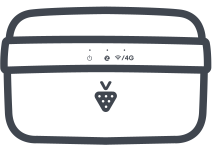
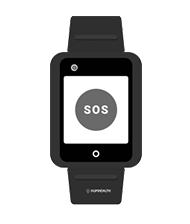
Clinics implement RPM programs with the help of RPM software companies by providing vital monitoring devices, automated data transmission, and clinical dashboards that allow providers to review patient readings and manage care efficiently.
Below are the most commonly used CPT codes for RPM Medicare billing.
-
CPT 99453 – Device Setup and Patient Education
CPT 99453 covers the initial setup of the RPM device and patient onboarding when a patient is enrolled in a remote monitoring program.
During this stage, the clinic provides the monitoring device and educates the patient on how to use the device at home. Healthcare staff ensure that the device is properly connected to the RPM platform so that patient data can be transmitted to the clinic.
This code can typically be billed once per patient when the RPM program is initiated. Proper documentation is required to confirm that the device setup and patient education were completed successfully.
Average Reimbursement for CPT 99453 – $22
-
CPT 99445 – Device Supply and Data Transmission (2–15 Days)
CPT 99445 covers the supply of a Remote Patient Monitoring (RPM) device and the transmission of patient health data for 2 to 15 days within a 30-day monitoring period. This code allows providers to bill when patient readings are recorded for a shorter duration during the month.
The transmitted data may include vital signs such as blood pressure, oxygen levels, glucose readings, or weight. These are then sent automatically from the patient’s device to the provider’s monitoring system.
CPT 99445 can be billed once every 30 days when the device records and transmits data for at least 2 days but no more than 15 days during that period.
Average Reimbursement for CPT 99445 – $52 -
CPT 99454 – Device Supply and Data Transmission
CPT 99454 reimburses providers for supplying the RPM device and collecting physiological data transmitted from the patient.
To bill this code, the RPM device must transmit patient readings for at least 16 days within a 30-day period. The transmitted data may include vital signs such as blood pressure, oxygen saturation, glucose levels, or weight.
RPM software platforms automatically collect and organize these readings into dashboards where healthcare providers can review trends and identify potential health risks.
This code is typically billed once every 30 days as long as the monitoring requirements are met.
Average Reimbursement for CPT 99454 – $52
-
CPT 99470 – Remote Monitoring Management (10 Minutes)
CPT 99470 is used when a healthcare provider spends at least 10 minutes in a 30-day period reviewing Remote Patient Monitoring (RPM) data and managing patient care. This may include analyzing patient readings, assessing health trends, and communicating with the patient when necessary.
This code can be billed once per month when the total RPM management time reaches 10 minutes but is less than 20 minutes. RPM platforms like HumHealth help providers track monitoring time and maintain proper documentation for billing compliance.
Average Reimbursement for CPT 99470 – $26
-
CPT 99457 – Remote Monitoring Management
CPT 99457 covers the clinical time spent reviewing RPM data and interacting with the patient.
To bill this code, healthcare providers or clinical staff must spend at least 20 minutes per month reviewing patient readings, evaluating trends, and communicating with the patient or their caregiver.
This monitoring process allows care team to detect early warning signs, adjust treatment plans, and guide patients on managing chronic conditions more effectively.
Average Reimbursement for CPT 99457- $52
-
CPT 99458 – Additional Monitoring Time
CPT 99458 is used when additional clinical monitoring time is required beyond the first 20 minutes covered by CPT 99457 (note that 99458 can only be used as an add-on code).
For every additional 20 minutes of patient monitoring and care management performed during the same month can be billed with CPT 99458 as an add-on code. It cannot be utilized in a stand-alone capacity.
This additional monitoring time may include reviewing patient trends, adjusting care plans, coordinating with other healthcare staff, or conducting follow-up communications with the patient.
Average Reimbursement for CPT 99458- $41
-
CPT 99091 – Remote Data Review and Interpretation (30 Minutes)
CPT 99091 is used when healthcare providers review and interpret patient physiological data transmitted remotely during a calendar month. This includes analyzing readings such as blood pressure, glucose levels, heart rate, or other vital signs to support clinical decisions.
To bill this code, providers must spend a minimum of 30 minutes in a calendar month, with at least one device reading required.
This code is typically billed once per month when the time requirement is met. RPM platforms like HumHealth help clinics collect patient data, track trends, and maintain proper documentation for accurate billing compliance.
Average Reimbursement for CPT 99091 – $55
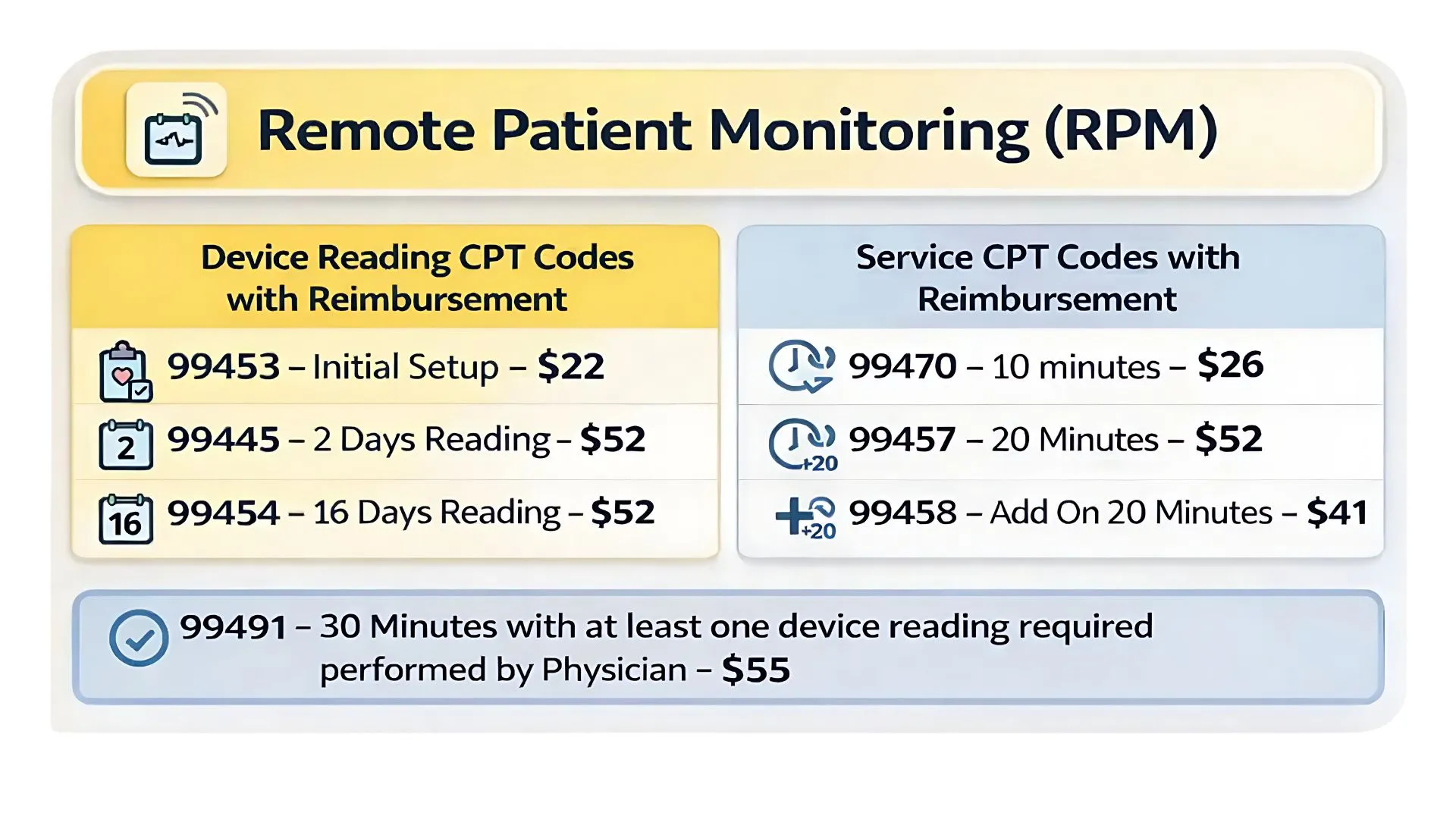
*Reimbursement rates are based on a national average and may vary depending on your location. Check the Physician Fee Schedule 2026 for the latest information.
How Small Clinics Can Maximize RPM Revenue
Small clinics can successfully maximize RPM revenue by implementing a structured and efficient approach to their Remote Patient Monitoring program by following these simple steps.
-
First, choose the right Remote Patient Monitoring Software
-
Next, focus on Chronic Care Patients
-
Then, prepare for 24/7 patient engagement
-
Finally, leverage automated monitoring systems and solutions
Selecting a reliable and affordable solution like HumHealth Remote Patient Monitoring Software ensures seamless device integration, accurate data collection, and efficient patient monitoring. A well-designed platform streamlines workflows and supports proper documentation for billing compliance.
Patients with conditions such as hypertension, diabetes, and heart disease are ideal candidates for RPM. Using platforms like HumHealth, clinics can easily track patient data and manage chronic conditions more effectively.
Continuous communication with patients is essential for the success of an RPM program. Staying connected with the care team improves patient participation and long-term engagement.
Having a dedicated mobile app plays a key role in achieving this. Patients can easily stay connected, track their health data, and communicate with care teams—helping them better manage their conditions and remain actively involved in their care.
Modern RPM platforms that automate data collection, generate alerts for abnormal readings, and streamline reporting. This enables clinics to manage a larger patient population efficiently while maintaining high-quality care and accurate documentation.
What is the estimated RPM revenue per patient?
Healthcare organizations often wonder what kind of revenue they can expect with RPM programs? When clinics implement a structured patient monitoring solution, they can generate a recurring revenue stream from each enrolled patient. On average, RPM Medicare reimbursement can range between $120 to $180 per patient per month, depending on the services provided and the time spent monitoring patients.
For example:
- 50 enrolled patients can generate approximately $6,000 – $9,000 per month
- 100 enrolled patients can generate approximately $12,000 – $18,000 per month
- 200 enrolled patients can generate approximately $24,000 – $36,000 per month
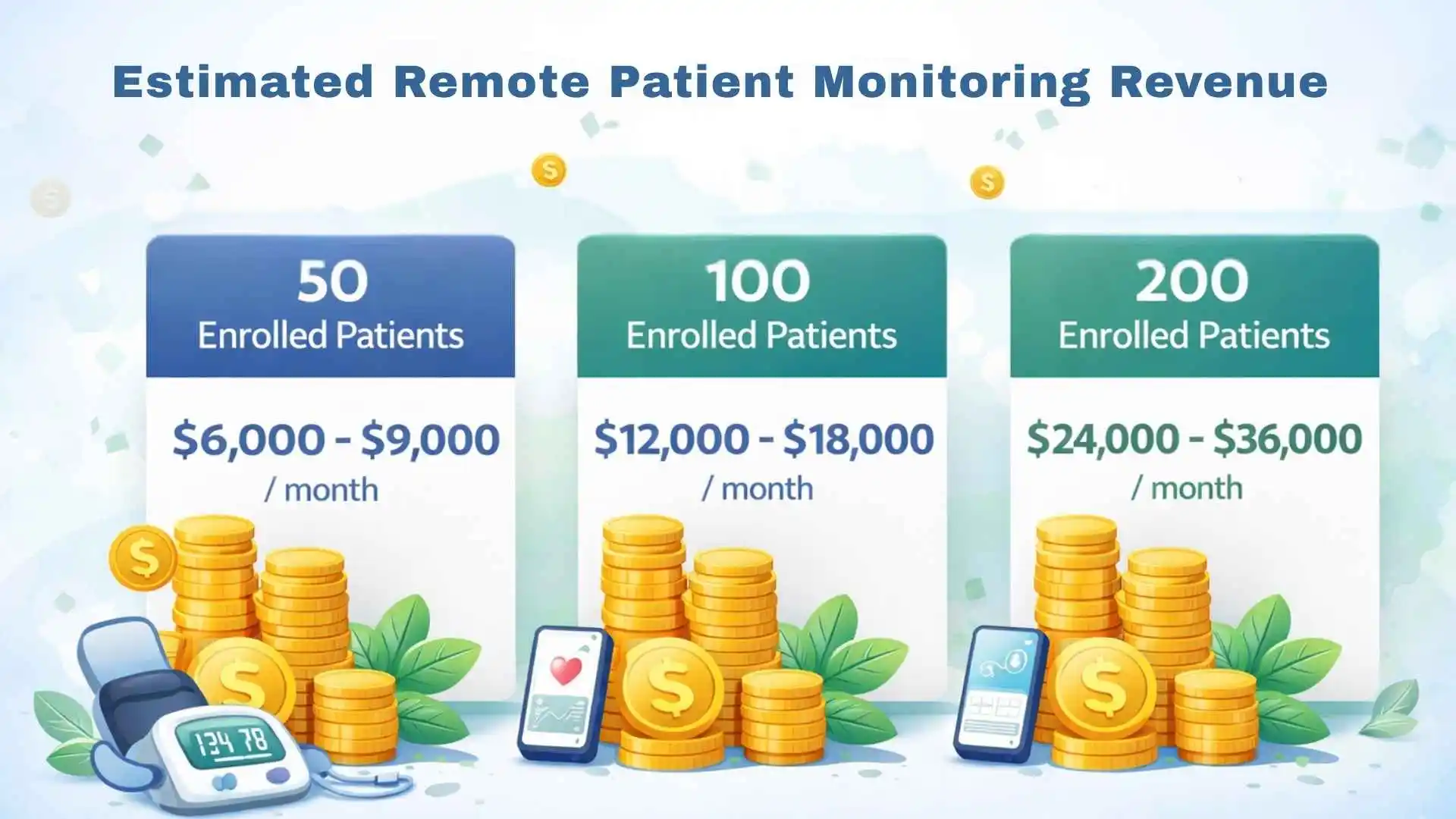
Because RPM services are billed monthly, clinics benefit from predictable recurring revenue while continuously monitoring patient health.
Why RPM Programs Are Growing Quickly
Many clinics are adopting RPM programs because they improve patient care while supporting effective revenue management and growth through Medicare reimbursement.
-
Better Chronic Disease Management
-
Reduced Hospitalizations
-
Improved Patient Engagement
-
Scalable Healthcare Services
RPM allows providers to closely monitor patients with chronic conditions such as hypertension, diabetes, and heart disease.
Early detection of abnormal readings allows healthcare providers to intervene before conditions worsen.
Patients become more involved in managing their health when they regularly track their vital signs.
With modern Remote Patient Monitoring Software with devices like HumHealth, clinics can monitor thousands of patients simultaneously.
The Future of Remote Patient Monitoring
As healthcare continues to shift toward digital care, Remote Patient Monitoring Software is expected to play a major role in managing chronic diseases and improving patient outcomes. Clinics that implement RPM programs today are positioning themselves for the future of healthcare.
By combining patient care with RPM Medicare billing, healthcare providers can improve health outcomes while generating sustainable revenue for their practice.
Adding a RPM program to your clinic
Remote Patient Monitoring is more than just a technology trend, it is a powerful tool that helps clinics deliver proactive care while creating a reliable revenue stream. With the right Remote Patient Monitoring Software, clinics can easily implement RPM programs, monitor patients remotely, and maximize Remote Patient Monitoring revenue through Medicare reimbursement.
Want to see how HumHealth can improve patient outcomes and grow your practice revenue? Request your free demo today and see it in action.