CMS Final Rule 2026: New RPM Codes Expand Flexibility and Reimbursement Opportunities
The Centers for Medicare & Medicaid Services (CMS) has finalized the 2026 Physician Fee Schedule (PFS), introducing significant updates to Remote Patient Monitoring (RPM) reimbursement.
Two new CPT codes 99445 and 99470 provide additional billing options for shorter monitoring durations and management times, giving healthcare providers greater flexibility to deliver high-quality care through remote technology.
New RPM CPT Codes Finalized for 2026
CPT 99445 – RPM Device Readings (2–15 Days)
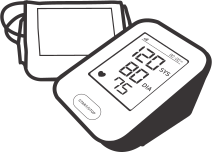
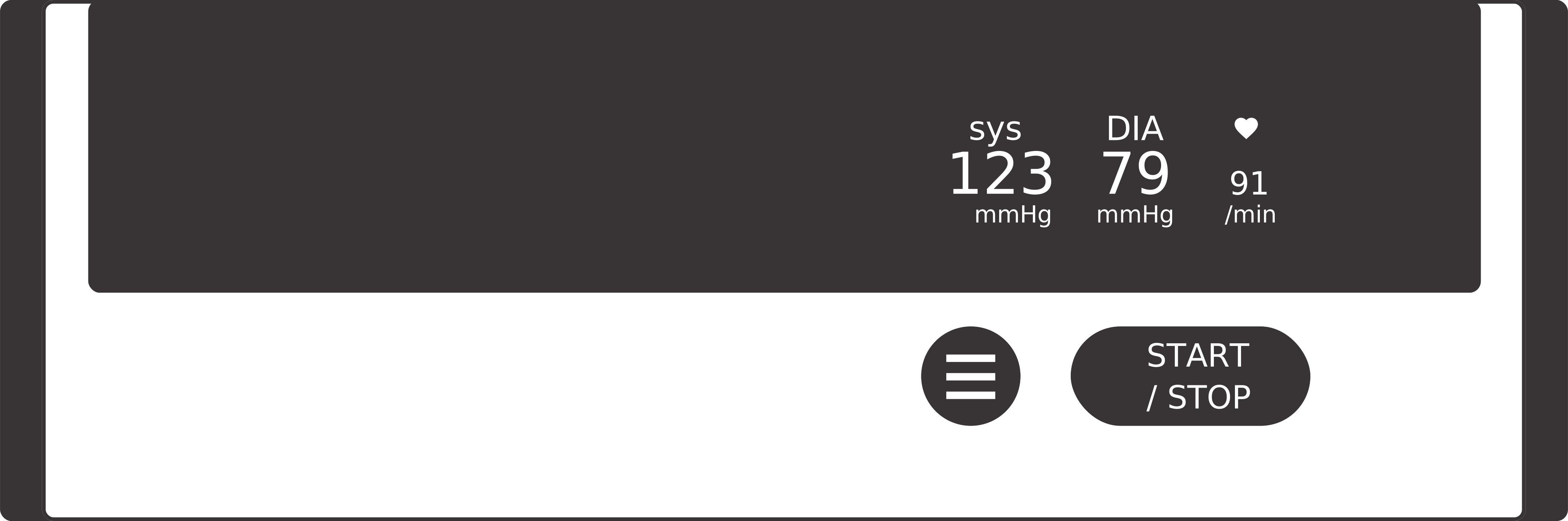
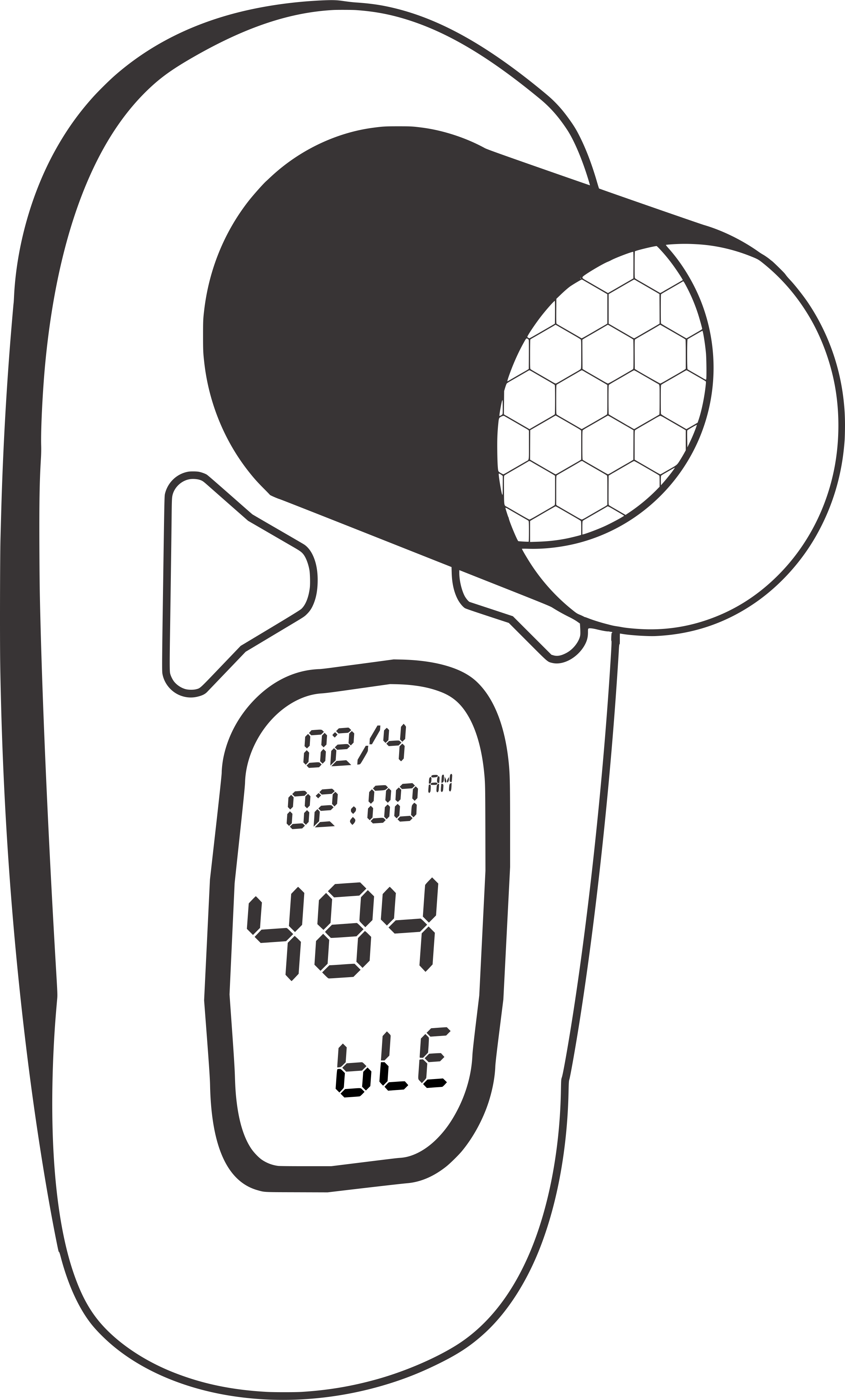
- Covers remote monitoring of physiologic data (e.g., BP, SpO₂, weight, respiratory rate) for 2–15 days in a 30-day period.
- Includes the initial device supply and daily data transmission.
- Approximate 2026 Reimbursement: $47
Note: CPT 99445 cannot be billed with 99454 (16-30 days). Choose the appropriate code based on monitoring duration.
CPT 99470 – RPM Treatment Management (First 10 Minutes)
- Covers time spent by clinical staff, physicians, or qualified healthcare professionals per calendar month.
- Requires at least one real-time, interactive communication (phone or video).
- Designed for shorter management durations under 20 minutes.
- Approximate 2026 Reimbursement: $26
Note: CPT 99470 cannot be billed with 99457 (first 20 minutes). Additional time continues under CPT 99458.
Existing RPM Codes Remain Unchanged
The new additions enhance RPM services does not replace the established RPM code set. These foundational codes remain the core of most remote monitoring programs.
Together, they create a comprehensive billing pathway that supports every stage of patient care from onboarding and device setup to continuous monitoring and active management.
Equal Valuation for 99445 and 99454

CMS has finalized equal valuation for CPT 99445 and CPT 99454, both reimbursed at approximately $47 based on the 2026 national average rate.
This reflects CMS’s recognition that device-related costs remain consistent regardless of the number of monitored days.
Guidelines for Interactive Patient Communication
CMS reaffirmed that all RPM treatment management codes 99470, 99457, and 99458 require at least one real-time interaction between the care team and the patient or caregiver.
Key Takeaways:
- Live communication may occur via phone, video, or secure messaging platform.
- In-person encounters cannot be double-counted toward RPM time.
- Interactive time contributes to total billable minutes.
This clarification helps providers maintain compliance and ensures patient engagement remains central to RPM care delivery, reinforcing CMS’s intent to prioritize active, real-time communication in remote care.
RPM Billing in FQHCs and RHCs
While CMS did not introduce new payment models for Federally Qualified Health Centers (FQHCs) and Rural Health Clinics (RHCs), these organizations will continue to bill using individual RPM CPT codes.
This policy enhances transparency, flexibility, and financial visibility for remote monitoring services in rural and community health environments.
Key Benefits of the 2026 CMS RPM Final Rule
The 2026 Final Rule reflects CMS’s ongoing commitment to expanding access, improving patient outcomes, and supporting value-based care.
For Providers:
- Align billing with real clinical workflows
- Reduce administrative overhead
- Expand participation in chronic and transitional care programs
For Patients:
- Access RPM for short-term or acute care needs
- Receive personalized and timely interventions
- Benefit from seamless continuity of care
Future Outlook: Continuous Evaluation and Refinement of RPM Codes
As part of its commitment to evolving digital health policy, CMS will conduct a comprehensive reassessment of all Remote Patient Monitoring (RPM) codes after one year of implementation under the 2026 framework.
This review will focus on analyzing Relative Value Units (RVUs) including work RVUs, practice expense RVUs, and malpractice RVUs along with utilization data, to ensure that reimbursement values remain accurate, equitable, and reflective of real-world practice.
By taking a data-driven approach, CMS aims to maintain fair reimbursement, enhance program sustainability, and promote the nationwide adoption of RPM as a key pillar of value-based care.
Summarizing the 2026 CMS Final Rule
The 2026 CMS Final Rule represents a major milestone in the evolution of remote patient monitoring.
With the addition of CPT 99445 and 99470, healthcare providers gain more control and flexibility over billing, enabling them to deliver patient-centered care across diverse clinical scenarios.
Healthcare organizations that proactively update their documentation, workflows, and billing systems will be best positioned to lead the next generation of connected, tech-enabled care.
Disclaimer*
The information provided in this article is intended for general informational purposes and does not serve as legal, medical, or billing advice. Consult your payers and the current CPT manual for official coding and reimbursement guidance.