Published:
July 30, 2026 | 7 min readChronic Care Management (CCM) and Remote Patient Monitoring (RPM) have evolved from an optional digital healthcare service into essential care solutions for many medical practices. These programs help healthcare providers stay connected with patients between office visits, monitor chronic conditions more effectively, and deliver more proactive, personalized care.
For patients looking for better ways to manage their health or medical practices exploring new ways to improve patient outcomes, the same question often comes up: Which types of medical practices provide Chronic Care Management and Remote Patient Monitoring services?
As healthcare continues to shift toward value-based and preventive care, more specialties are adopting CCM and RPM programs to support patients with ongoing health needs. Some medical practices are especially well-suited for these services because of the conditions they manage and the level of continuous care their patients require.
Chronic Care Management vs. Remote Patient Monitoring: How They Differ
Before looking at which specialties commonly use these programs, it’s important to understand that CCM and RPM work together but serve different purposes in patient care.
Chronic Care Management (CCM) covers non-face-to-face care coordination for patients with two or more chronic conditions expected to last at least 12 months (or until death). CCM focuses on creating a comprehensive care plan, medication management, specialist coordination, and patient engagement between office visits.
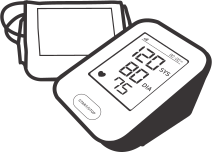
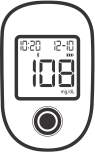
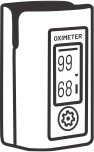
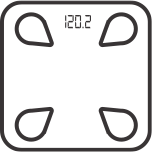
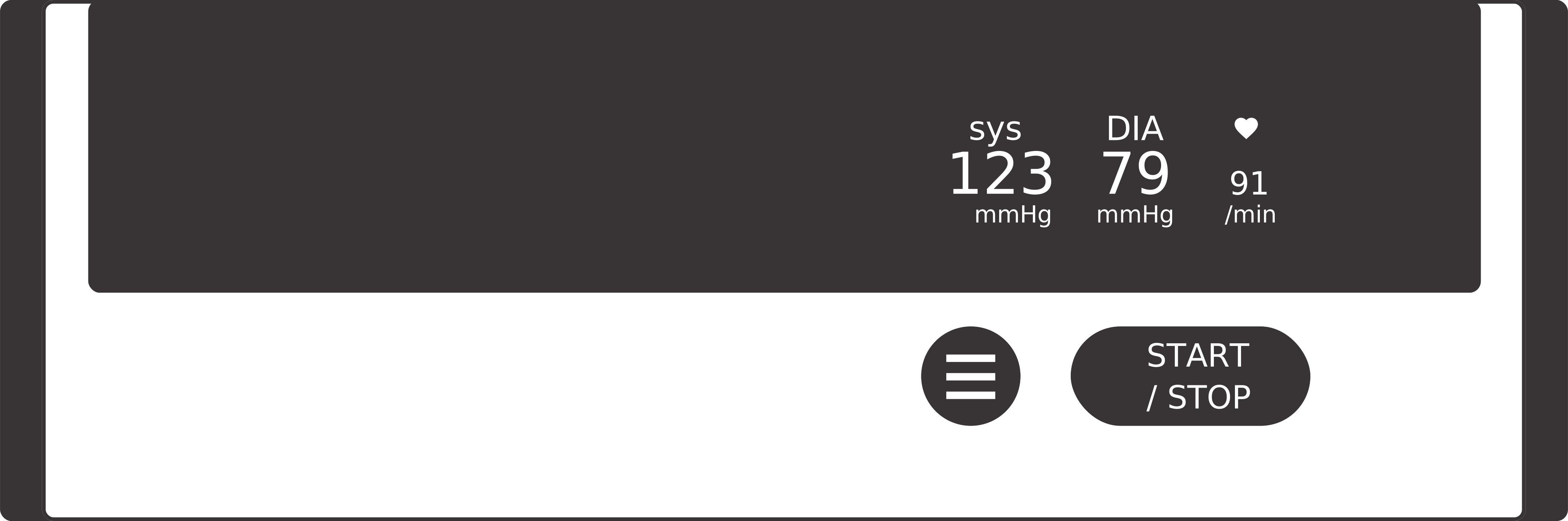
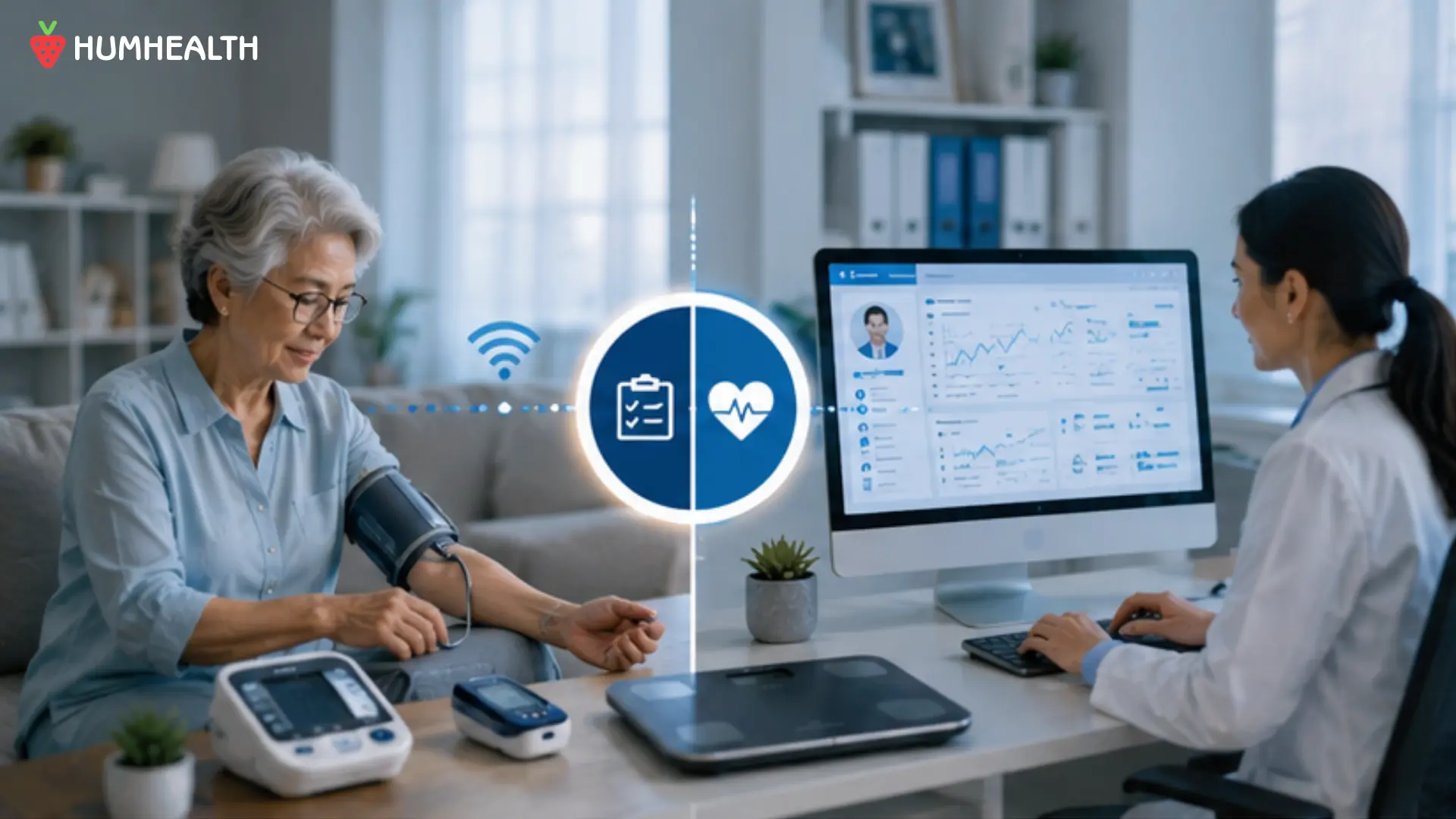
Remote Patient Monitoring (RPM) uses connected medical devices, such as blood pressure monitors, glucose meters, weight scales, and pulse oximeters, to collect important health information from patients at home. This data is securely shared with the care team, allowing providers to track changes, identify potential concerns early, and make timely adjustments to the patient’s care plan without waiting for the next office visit.
The two services work well together. A practice may use CCM to coordinate a patient’s care and add RPM to monitor real-time health data. Together, they help providers move from occasional office visits to continuous, proactive care.
Medical Specialties That Provide Chronic Care Management (CCM) and Remote Patient Monitoring (RPM) Services

These are the types of practices adopting CCM and RPM programs and the chronic conditions that make them a good fit.
1. Family Practice / Primary Care
Family medicine and primary care practices represent one of the largest groups using CCM and RPM services. Their patient populations often include older adults managing multiple chronic conditions, making them a natural fit for ongoing care programs. Conditions such as diabetes with hypertension or COPD with heart failure are common among primary care patients.
Since many Medicare patients manage two or more chronic conditions, family practices often have a large group of eligible patients within their existing population. This makes primary care one of the best places to start a CCM and RPM program.
2. Internal Medicine
Internal medicine providers regularly care for adults with complex health needs and multiple chronic conditions, making them a strong fit for CCM and RPM. Conditions like hypertension, diabetes, high cholesterol, and heart disease are commonly managed in these practices and benefit from continuous monitoring and coordinated care.
Many internal medicine practices have successful CCM and RPM programs because their patients often require ongoing support and regular health management.
3. Nephrology Clinics
Nephrology practices are well-suited for CCM and RPM programs. Patients with chronic kidney disease often manage additional conditions, such as hypertension and diabetes, making care coordination especially important.
RPM helps nephrology teams track important health trends, including blood pressure and weight changes, which may indicate fluid buildup or disease progression. Early monitoring allows providers to address concerns before they become serious.
4. Cardiology
Cardiology practices have been among the early adopters of RPM because heart conditions often require regular monitoring. Managing heart failure, hypertension, and arrhythmias depends on tracking health trends such as weight, blood pressure, and heart rate.
RPM allows care teams to identify changes early, helping reduce complications and support better patient outcomes while aligning with value-based care goals.
5. Endocrinology / Diabetes Management
Endocrinology practices commonly use RPM for monitoring glucose levels and blood pressure. Diabetes care depends heavily on tracking health data, and connected devices provide providers with a clearer view of a patient’s condition between visits.
Combining CCM with RPM helps support medication management, lifestyle changes, and ongoing care needs for patients managing diabetes.
6. Pulmonology
Pulmonology practices often use RPM for patients with COPD, asthma, and other chronic respiratory conditions through devices like pulse oximeters and symptom monitoring tools.
Patients with COPD and other chronic conditions may benefit from CCM, while RPM helps providers identify changes in oxygen levels early and reduce the risk of complications or emergency visits.
7. Geriatrics
Geriatric practices often care for patients with multiple chronic conditions, making them a strong fit for CCM and RPM programs. Older adults may need support managing several health concerns while coordinating care among different providers.
CCM helps improve communication, care coordination, and overall support for the complex needs of geriatric patients.
8. FQHCs, RHCs, and Community Health Centers
Federally Qualified Health Centers, Rural Health Clinics, and community health centers are increasingly adopting CCM and RPM to support patients who need ongoing care and improved access to healthcare services.
For these organizations, remote care management helps reach underserved populations, improve care delivery, and create a stronger foundation for value-based healthcare.
CCM and RPM Adoption by Medical Specialty
| Practice / Specialty | Typical Chronic Conditions Managed | Strongest Fit |
|---|---|---|
| Family Practice / Primary Care | Diabetes, hypertension, hyperlipidemia | CCM + RPM |
| Internal Medicine | Multi-condition adults, heart disease | CCM + RPM |
| Nephrology | CKD, hypertension, diabetes | CCM + RPM |
| Cardiology | Heart failure, hypertension, arrhythmia | RPM-led |
| Endocrinology | Diabetes, thyroid, metabolic disease | RPM-led + CCM |
| Pulmonology | COPD, asthma | RPM-led |
| Geriatrics | Multiple concurrent chronic conditions | CCM-led + RPM |
| FQHC / RHC / CHC | Broad chronic + underserved populations | CCM + RPM |
Who Qualifies for CCM and RPM?
Patients don’t need a specific specialty to qualify, they need the right clinical profile.
CCM is generally designed for patients managing two or more chronic conditions that require ongoing care coordination, a personalized care plan, and documented consent. Common examples include diabetes with hypertension, COPD with heart failure, and depression with chronic pain.
RPM is intended for patients who benefit from regular monitoring of health data through FDA-cleared connected devices. It can support long-term condition management as well as short-term monitoring after events such as hospital discharge.
Why Practices Are Adding CCM and RPM in 2026
The momentum behind these programs is driven by three key factors:
1. Better outcomes:
Regular monitoring and coordinated care help providers identify issues earlier, prevent avoidable hospital visits, and better manage chronic conditions. 2. A sustainable revenue stream:CCM and RPM are reimbursable under the Medicare Physician Fee Schedule. Standard CCM (CPT 99490) reimburses roughly $66 per patient per month in 2026 on a national-average basis, with add-on codes for additional time. RPM has its own set of billing codes, and the 2026 Final Rule introduced more flexibility, including new options for shorter monitoring periods and management time. Reimbursement amounts may vary based on the provider’s location and Medicare guidelines.
3. Support for value-based care:As healthcare continues moving toward outcome-based reimbursement, the foundation created by these programs, including care plans, remote health data, and proactive patient outreach, has become an important part of modern care delivery.
4. Compliance reminder:CMS continues to review care-management reimbursement programs, so practices must maintain accurate documentation, updated care plans, and proper time tracking to support compliance and avoid payment issues.
How a Practice Launches a CCM and RPM Program
If your practice is considering offering these services, here’s how to launch a CCM and RPM program — the process typically involves the following steps:
- 1. Identify eligible patients:
Start by reviewing your patient population to find individuals with two or more qualifying chronic conditions, such as diabetes, hypertension, COPD, heart failure, or depression, who may benefit from ongoing care management.
- 2. Choose the right care model:
Determine whether staff-led CCM (CPT 99490) or physician-led CCM (CPT 99491) best fits your workflow, and select RPM devices based on your patient’s monitoring needs.
- 3. Obtain and document patient consent:
Patient consent must be collected and documented before starting CCM services. Platforms like HumHealth simplify this process with electronic signature features that allow patients to provide consent digitally.
- 4. Create the care plan and workflow:
Develop personalized care plans, define care-team responsibilities, and establish processes for tracking time, patient communication, and ongoing follow-ups.
- 5. Choose a CCM/RPM platform:
A dedicated CCM and RPM platform helps manage device data, documentation, time tracking, and billing workflows, allowing your team to spend more time focusing on patient care instead of administrative tasks.
Ready to Start Your CCM and RPM Program?
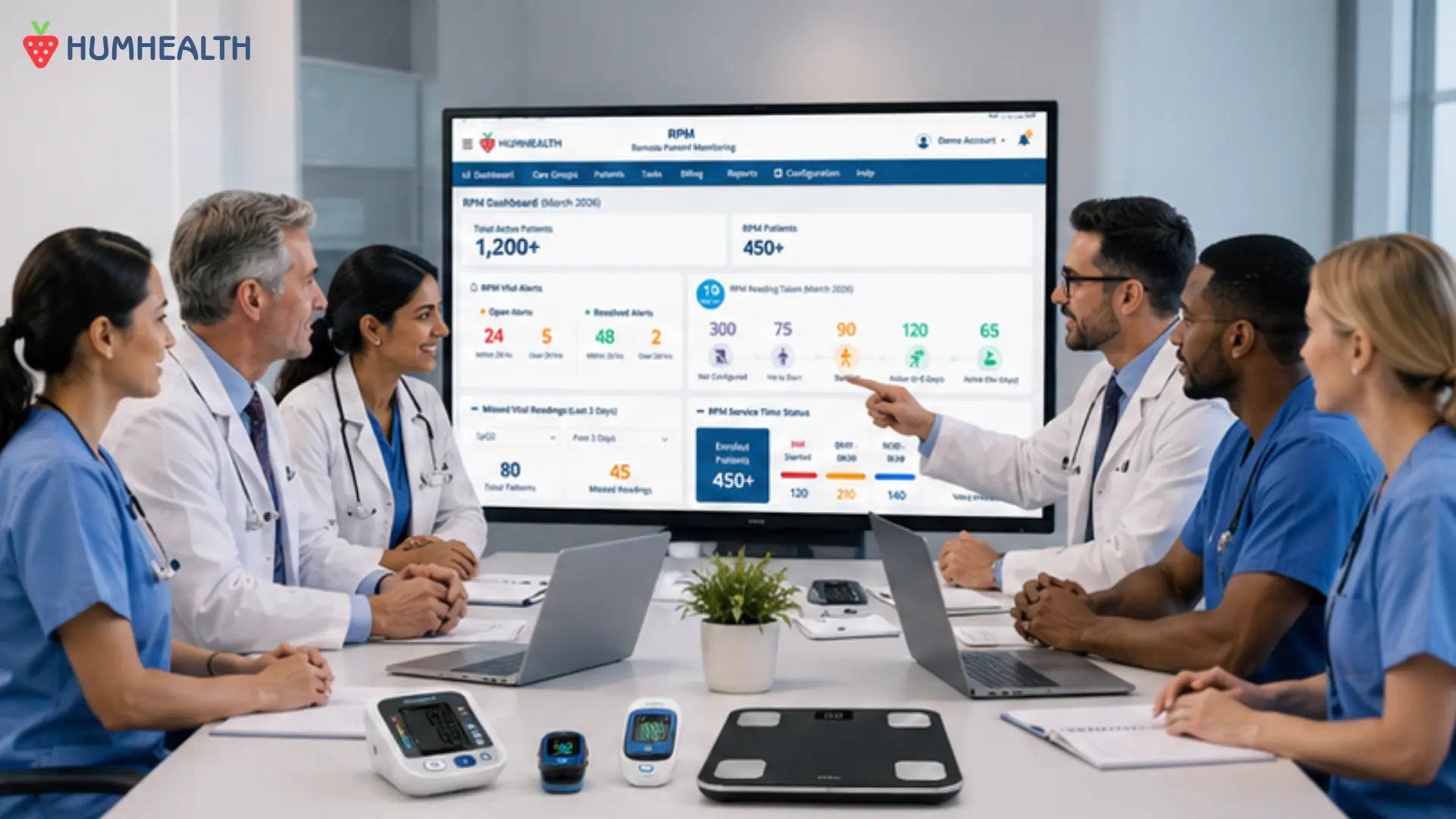
HumHealth helps healthcare providers manage patient enrollment, care coordination, remote monitoring, documentation, and billing processes through an all-in-one Chronic Care Management and Remote Patient Monitoring platform. Request a free demo to see the platform in action.
Frequently Asked Questions
Primary care and internal medicine physicians offer these services most often, followed by nephrologists, cardiologists, endocrinologists, and pulmonologists. Any provider treating patients with qualifying chronic conditions can offer CCM and RPM.
Yes. Nephrology is a strong fit because CKD patients almost always have comorbidities like hypertension and diabetes, meeting CCM eligibility, and their blood pressure and weight trends make RPM clinically valuable.
Yes. The two services are commonly combined — CCM for care coordination and RPM for real-time physiologic data — as long as billing and documentation requirements for each are met separately.
Two or more chronic conditions expected to last at least 12 months (or until death) that place the patient at significant risk of decline.
No. RPM supports long-term chronic disease management as well as shorter-term needs such as post-discharge monitoring, thanks to added flexibility in 2026 billing rules.